Serving Will & DuPage County, IL
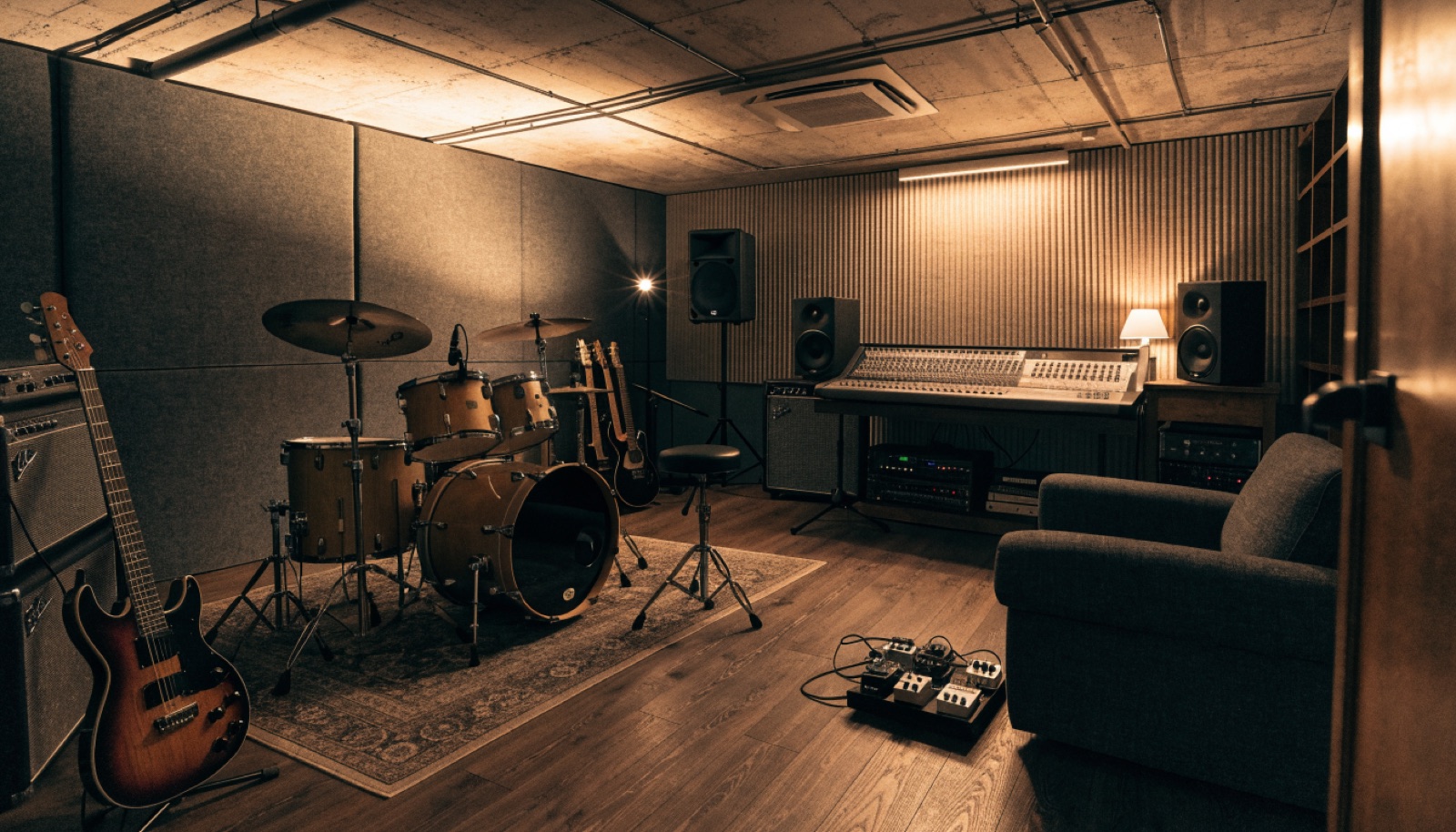
Real soundproofing is construction, not foam panels. Keeping a drum kit or a full mix out of the living room above takes decoupled framing, mass in the walls, sealed penetrations, and a door assembly that closes like a vault. Basements start with a natural advantage, concrete on most sides, and we build the rest.
The same shell that keeps sound in keeps noise out, which is why podcasters and streamers love these rooms: no furnace rumble, no lawnmower next door, just a clean noise floor.
A drum room, a mixing room, and a podcast studio want different acoustics, and treatment is where the room gets tuned: absorption and diffusion placed for the use, not stapled up at random. We design ventilation that moves air silently, because a soundproof room without airflow is a room nobody can work in.
Bring us the loudest thing you own and how late you want to use it. That sets the target, and the quote itemizes exactly what construction hits it.
Drums are the hardest test, and yes, with room-in-room construction: floated or decoupled framing, double mass layers, and a sealed sound-rated door. We state the expected reduction honestly during design rather than promising absolute silence.
A low noise floor and controlled reflections. That means quiet ventilation, isolation from house mechanicals, and absorption placed around the mic position. Size matters less than silence.
Yes. The studio shell also keeps theater bass and game-room noise from traveling upstairs, and we often coordinate the studio build with the theater for shared isolation.
Tell us about your basement and we will follow up within one business day to set up an in-home visit.